
Application Programming Interface (API): Mechanisms for linking and exchanging software data

Application Programming Interface (API): Mechanisms for linking and exchanging software data
Application Programming Interfaces (APIs) form the connective tissue of modern software engineering. For architectural principles and systems integration patterns, see our guides on API principles and software integration and API systems communication.
Application Programming Interface, API, providing standardized input and output mechanisms. The main objective is to provide a roster of fully independent functions from the mechanism to be implemented, allowing others to communicate with them through any other mechanism.
It is a set of definitions, protocols and tools for the sub-routine and designed to build applied software, and generally means a set of clear-cut ways of communicating the various software components. A well-designed API facilitates the development of computer software by providing all necessary software blocks, after which the programme would act on their winding and collection.
The interface may be dedicated to a web-based system, operating system, database system, computer hardware or software library.
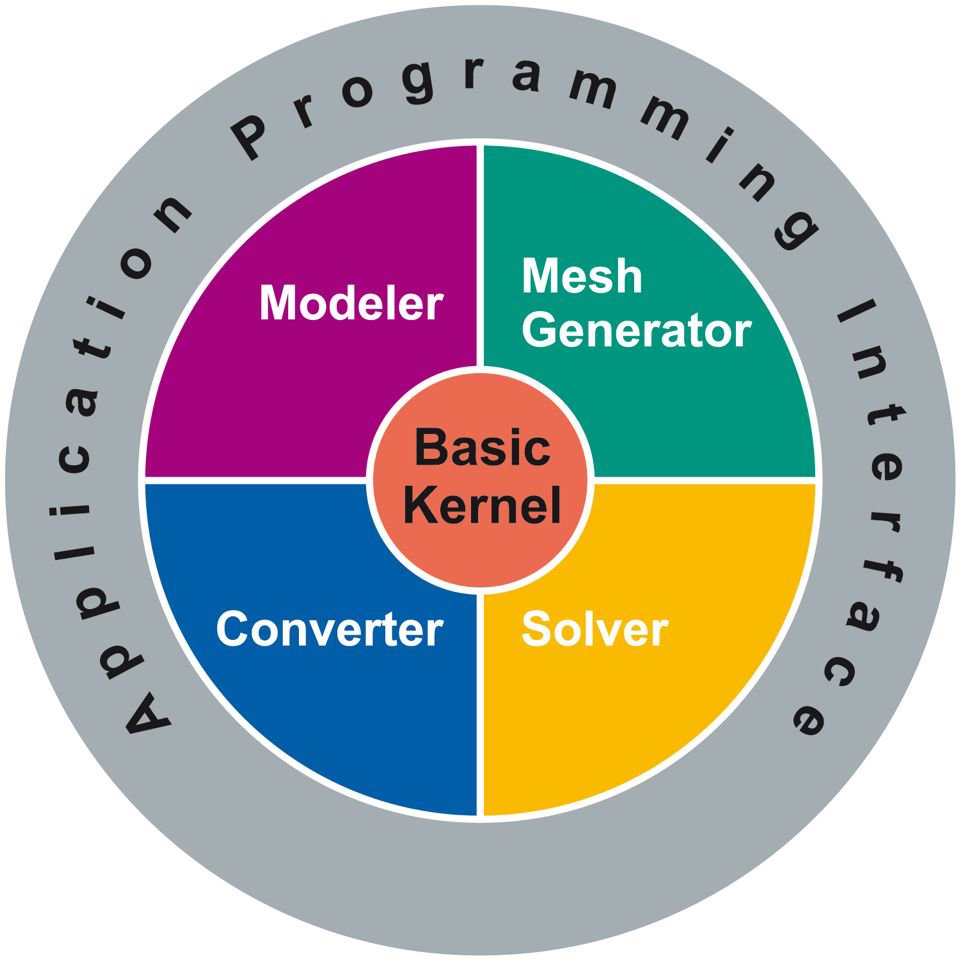 Application Programming Interface Architecture: Modular Components Communicating with a Basic Kernel
API specifications are in various forms but often include routine specifications, data structure, object classes and data structures, variables or far-reaching action appeals. " Bosex " (POSIX), the Windows API application programming interface and the ASPI advanced programming interface are examples of the multiple formats usually taken by the application reproduction interface.
Purpose
As the user interface facilitates the use of programmes, the software interface for the software developer facilitates the use of certain technologies in the construction of applications by de-implementing the underlying implementation and detecting only the organisms or works required by the developer, the application software interface facilitates the programming process, and while the skeleton interface for an electronic mail agent may be conceived to provide a user-friendly version of each new software function.
There are two types of API:
Types
| Protocol / Architectural Style | Primary Data Format | Transport Protocol | Common Enterprise Use Case |
|---|---|---|---|
| REST (Representational State Transfer) | JSON, XML, HTML | HTTP / HTTPS | Public web APIs, SaaS integrations, and mobile backend services |
| GraphQL | JSON (Schema-typed queries) | HTTP / HTTPS | Complex frontend dashboards requiring precise client-specified data fields |
| gRPC / Protocol Buffers | Binary Protocol Buffers | HTTP/2 | High-throughput, low-latency microservice-to-microservice internal communication |
| SOAP (Simple Object Access Protocol) | XML | HTTP, SMTP, TCP | Legacy enterprise banking, government systems, and financial EDI gateways |
One relies on the language of programming; that is, it is available only in a particular programming language, and is based on the use of syntax and its elements to make it suitable for use in this context.
The other is independent of the language, which means that it is written in a way that allows it to be used in many programming languages (usually an assembly/C-level interface) and this pattern is required in the types of API software that are used in a service not linked to a particular process, or an operating system that is usually available separately.
An example of type II is the location where restaurants are located somewhere that allows the user to develop an additional information package on the same site map that has been brought from Google maps, for example, because Google maps contain this type, which allows for this to be done, an application programming interface for Google maps that control the information that the user can use and what it can use, and not only on the web site for many tasks.
Uses
The creation and use of application programming facades is a major theme in contemporary programming. Applications usually benefit from many programming interfaces; implemented by software libraries, which can in turn use other programming facades.
In service structures, applications can rely on the advantages offered by third-party programmes through software interfaces implemented by Web services.
The programming interface, for example, allows UNDP access to the services provided by the programme ' s operating system, the socket interface is a classic example of the programming interface, which allows the programme to exploit the potential of the network layer of the operating system.
Libraries and frameworks
The application programming interface is usually linked to a software library, which describes the interface and defines the expected behaviour (description) when the Library is in the actual implementation of this set of rules. A single front can conduct several implementations (or if they are simply) in the form of different libraries sharing the same programming interface.
The separation of the front from the implementation of language-specific programmes allows for the use of a library in another language, for example, since the two languages of " Scala " and " Jaffa " are transformed into the code of the matching units of the beit (bytecode), the " Scala " developer can benefit from any dry interface.
The use of the application programming interface varies according to the language of the programming used: the procedural language facade along the lines of " they " may consist primarily of a basic routine for the implementation of the code, the disposal of data or the handling of errors, while the face of the subject-mattered language such as Jaffa may disrupt the characterization of the items and the methods of their particular items.
The language interface is also a type of application programming interface, when the characteristics and potential of a particular language are linked to another language interface, which allows the language interface to use the library or written service in one language when it is developed in another language. Tools are facilitating the creation of such fronts, including the SWIG and F2PY tool.
The application programming interface could also be linked to a programming framework, where the framework could be based on several libraries that implement several application programming interfaces, but other than the usual use of the application programming interface, access to business-inclusive behaviour by expanding its content across new items linked to the same framework.
In addition, the programme-wide flow control mechanism may be removed from the control of the interconnected and under the control of the framework by changing the control or similar mechanism.
Operating systems
The application programming interface can identify the interface between application and the operating system. For example, Bozex identifies a set of common application programming interfaces aimed at allowing the conversion of a descriptive application of a Puzex-compliant operating system to another Operating System matched with Posex.
Microsoft expressed a significant commitment to the front for programming retroactive applications, particularly in the Windows32 Library for the Windows Applications Programming Face, so that old applications can be activated on the new versions of Windows through the development of an operational programme allocation called " Consensual Model ".
The application programming interface differs from the bilateral application interface in that the first is based on a source code and the second is based on a bilateral file; for example, Posex provides application programming interfaces, while the Lennox model rule provides a bilateral application interface.
Remote APIs
These remote fronts allow developers to manage remote resources through protocols, and specific communication standards that allow different technologies to work together, regardless of the software or platform. For example, the application programming interface for the " dry database " allows developers to inquire about several different types of databases by using the same set of functions, while a dry application software interface is used for the remoteness of a generic application module.
The remote application programming facades are therefore useful in maintaining the deregulation of organisms in veterinary programming; the call for localization of methods on an agent ' s entity calls for the way in which the remote entity is matched by the remote protocol, the result that will be used locally as a reference value, and any modification of the agent will lead to a long-range adjustment.
Web APIs
The identification fronts through which the interactions between the enterprise and the applications using its assets occur, are also a service-level convention to identify the supply, offer the course of service or the address of the front user ' s website. The approach to the application programming interface is an engineering interface that revolves around the provision of programmable fronts, especially a service package, to different consumer applications.
When used in the context of web development, the application programming interface is usually defined as a set of applications, such as those of the Protocol for the Transfer of Excessive Text, with a definition of the structure of return letters, which are usually developed in the form of an extension-of-the-fashioned textile editing (Jesson) and, for example, a face-to-face application software interface for a routing technology.
The web application programming interfaces allow multiple application programming interfaces to be combined into new applications in so-called mixing techniques. In the area of social communication, Web applications programming interfaces have enabled web communities to facilitate the sharing of content and data between groups and applications. In this way, innovative content in a given location has become redisseminable and up-to-date in several other locations, for example, have provided an application interface. "
Market
In the modern software industry, computer applications typically use many third-party programmes, for example, the operating system, standard libraries and the application server system. Each product has its own programming interface, and therefore, every programmer involved in the development of such products also participates, consciously or not, in the trade of programming facades, from a commercial point of view, the software fronts are a contract in which the contractor describes its supply functions, advantages and limitations.
Building by compiling programmes requires the manufacturer to know how to interact with its constituent parts, which conducts the consolidation process does not need to know the details of the work of each part as long as it defines the front of its programmes, which is the minimum that the programmer needs to know to be able to use other software, and for the use of a job, it is essential that its name be known as its variables and the type of outcome.
Market programming facades are distributed as regular software product regularly improved; the implementation of functions used through programming facades can also change regularly, while maintaining the interface according to the contract.
Design
The concept of data concealment describes the role of programming facades in enabling synthetic programming by concealing the implementation details of formulations/units in such a way that the use of the formulation does not need to understand the complexities involved. Hence, the design of the application programming interface is trying to provide the tools expected by the user, and the design of programming facades is an important part of the software mechanism.
Joshua Blush, Ken Lane, and Michi Henning are many writers who have made recommendations on how to design application programming facades.
Release policies
Application programming interfaces are one of the common ways that technology companies use to unite with each other, and companies that secure and use these fronts are considered to be individuals in a business communication system.
Key policies for the production of application programming interfaces are:
Special use: where the application programming interface is intended for use only within the company. Use of partners: where specific business partners are entitled to use the application programming interface, for example, transport service companies such as Uber Walvet allow third-party developers to request delivery services directly from within their applications, allowing companies to exercise quality control by identifying applications that are entitled to access the application programming interface and providing additional input. General use: where the interface is available for the use of the general population, for example, Microsoft has made the software interface available to the public, while Abel has offered its known carbon and coco fronts for public use to allow the writing of software for their platforms.
Impacts of the public application programming interface
Interface stability is an important factor when you release an API for public use. Any change a developer makes to any part of it - such as adding new parameters to a function call - could break compatibility with clients that rely on that API.
When some parts of an API that are in public use are subject to change and therefore unstable, these API-specific parts must be explicitly documented as non-static. In the Google Java library, for example, parts that are considered unstable and may change in the near future are identified with the Java tag @Beta.
Sometimes, a public API may declare some parts of it deprecated or not recommended for use. This usually means that these parts should be considered candidates for removal or modification in an adverse, incompatible manner. These changes therefore allow developers to gradually move away from parts of the interface that will be removed or will not be supported in the future.
Documentation
API documentation describes the services the interface provides and how those services are used, aiming to cover all the aspects a customer needs to know for an application. Documentation is necessary to develop and maintain applications with the API. API documentation is usually found in documentation files but can also be found on social media such as blogs, forums, and Q&A sites.
Traditional documents are often presented through a JavaDoc or ByDoc-style documentation system that has a fixed format and structure. But the types of content included in documents vary from one interface to another. For the sake of clarity, interface documentation may include a description of the interface's classes and methods along with "normal usage scenarios, code snippets, design justifications, performance discussions, and contracts," but the implementation details of the interface services themselves are usually left out.
These documents also contain restrictions and controls on how to use the interface, where, for example, the documents for one of the facade ' s functions can state that their parameters cannot be revoked or that the same evidence does not enjoy the integrity of the strings or that the Protocol on Excession and Abolition prohibits self-exchange, and since the documentation of the application programming facades is generally comprehensive, it is difficult for writers to regularly update and users to read them carefully.
The documents can be enriched with descriptive statements along the lines of the explanatory comments from Jaffa, which are used by the software transformer, tools and the programme implementation environment for the implementation of ad hoc behaviour or ad hoc treatment.
Controversy on copyright
In 2010, the Oracle sued Google for the publication of a new Jaffa implementation, which was included in the Andreyd Operating System, and Google did not have any permission to reproduce a dry application programming facade, although a similar project called the Open Jaffa Development Module was already given to protect the authorization, and in the case of Oracle v. Google, Judge William Alps ruled a copy of the U.
Admission to the Oracle ' s request means allowing anyone to retain the right to publish and write a copy of a particular code required for the completion of an order system and thus preventing all other persons from writing their different versions of it in order to complete all or part of the same orders.
However, in 2014, Judge Alspine ' s judgment in the Court of Appeal was reversed, although the issue of whether this type of use of application programming facades is considered to be a fair use that remained unaddressed.
In 2016, after a two-week trial, a judge issued a decision in which Jogel ' s re-implementation of a dry applications face was considered to be fair, but Oracle undertook to appeal this decision, and in fact Oracle won the appeal, where the Federal Court of Appeal ruled that the use of Google for applications programming facades was not classified as fair use.
Key application programming languages
Programming language " Java " is the first of the programming languages preferred by all the developers of the Androids around the world, which are flexible, but can only be used in the development of the Android applications and will not be well-advised in the IOS.6 applications.
Android Studio: The best integrated development environment for the development and design of android applications facilitates the development of developers to write the source code for Android applications, allows the developer to inspect an apparatus with immediate effect on various screen measurements during development, and facilitates the development of multilingual applications. Swift: The official language has invaded the Apple system, taking into account the use of the last API layer programming interface, but although it is a language created to work together with the language of Objective-C, until Abel prepares this language for the future as the core language of iOS programmers and exempts developers from security gaps, the Soft is now a biblical future language. Xcode: An integrated environment for the development of ios applications for evaon and apple apps and includes all tools for the creation of staggering applications for all Apple platforms. XML: Used in the design of adreid applications by the responsible dizzyner.
API Facebook.
Examples of APIs
Google Maps API Windows API application programming interface Telegram API application programming interface
Examples by area of application
Three-dimensional drawings 3D: OpenGL, Dirk Thri Di (part of DirectX), Mantel (Advensd MicroDavis) Treatment of SAX documents, DOM: XML Database access: ODBC, JDBC Cartography and geographic information systems
Functions of programming interfaces in Java
For example, in J2EE, the programming facades may have multiple functions:
API synchronized/un synchronized communication API communications (indicators, databases and enterprise resource planning) API Transaction Management API e-mail management API series XML API XML analysis API management of XML records (e.g. ebXML)
Application programming interfaces can be used to simplify access to other application programming interfaces.
JAXP API provides easy access to various applications from SAX and DOM
Data transmitted
Programming facades can carry and run descriptive data.
In fronts provided by enterprise resource planning systems
Examples:API data 9i Oracle and plaque metadata SAP.
In programming languages
Jaffa example: API access and processing data recorded in a data source.
Decision systems
Example: API SAS metadata
In the databases.
Example: DB2 cubic
In cognitive engineering applications.
Example: Loading metadata to Livelink using Bulk Loader API's


